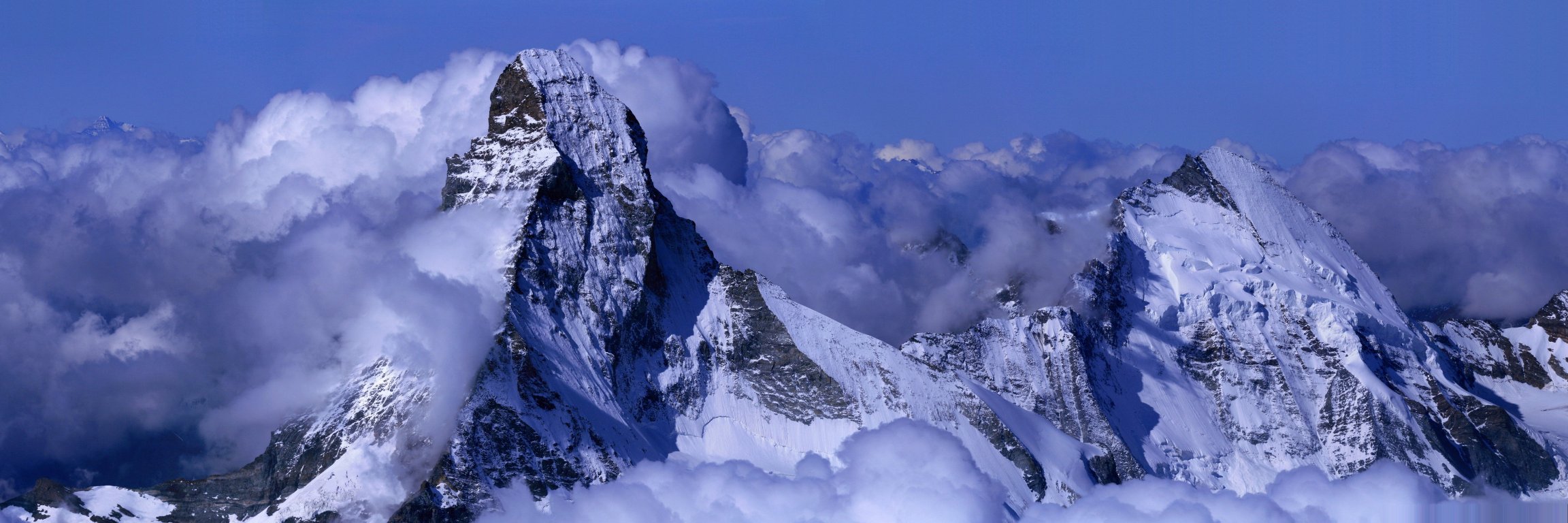
Matterhorn and Dent d’Hérens on the border between Switzerland and Italy.
Ambassador H. E. Lukas Handschin, working for Grün Stadt Zürich, the city of Zurich’s Office of Parks and Open Spaces.
A total of 17 Swiss people were living in Lithuania by the end of the year 2012. Out of the actually 1.864.699 foreigners living in Switzerland [by August 2013] approximately 1000 are Lithuanians.
Switzerland is a mountainous, landlocked country in Central Europe. Officially it is named Swiss Confederation (Latin: Confoederatio Helvetica, hence the abbreviation CH). You may have noticed this somehow strange country symbol on a sticker placed next to the number plate of cars. Get some useful travel information.
As a federal parliamentary republic Switzerland is currently consisting of 26 independent cantons, with no capital town. Bern, often considered to be the capital of Switzerland even by Swiss native people, is only the seat of the federal authorities and some – but by no means all – of the federal offices and institutions.
Switzerland has four official national languages, German, French, Italian, and Romansh (Rhaeto-Romanic), and a great variety of local dialects which may give you a hint about the manifold cultural regions and traditions. The Swiss, therefore, do not form a nation in the sense of a common ethnic or linguistic identity. The strong sense of belonging to the country is founded on the common historical background and shared values like federalism, direct democracy, independence, and neutrality. The establishment of the Swiss Confederation is traditionally dated to early August 1291 when a Letter of Alliance (or Federal Charter) was signed [there is no precise date given], documenting the Eternal League of the Three Forest Cantons, the union of three cantons (Uri, Schwyz, Unterwalden) forming the nucleus of the country in what is now part of central Switzerland. Hence Swiss National Day is celebrated on 1 August.
Switzerland is famous for its public transportation system, the federal railways as well as many others privately or publicly run companies. Have a look at this tv-spot.
Hereinafter you will find some examples of cultural ties between Switzerland and Lithuania in general, Vilnius and Užupis in particular.
Troughout the centuries the beauty of Swiss landscapes inspired many artists from all over Europe.
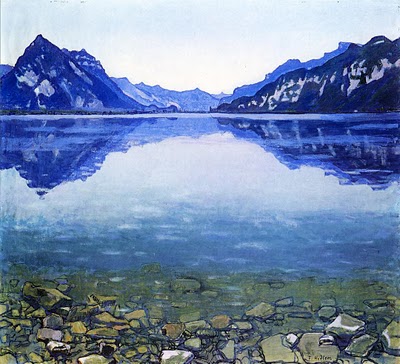
Ferdinand Hodler, Thunersee von Leissigen aus.
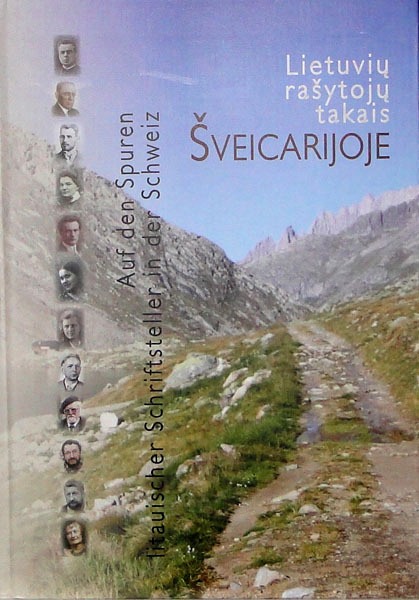
Switzerland did not only inspire painters but also quite a lot of Lithuanian authors and poets, among them e.g. Maironis at the beginning of the 20th century. This book which is leading you to the trails of Lithuanian authors in Switzerland was published in a bilingual Lithuanian-German edition in 2009 by Šveicarijos lietuvių bendruomenė.
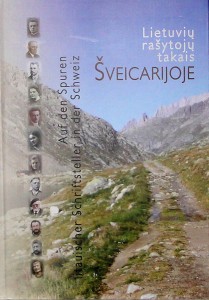
On the trails of Lithuanian authors in Switzerland.