Ambassador H.E. Michel Fortin
Jan 082014
Ambassador H.E. Michel Fortin
Consul H.E. Bruno Salles Pereira Ribeiro


People from the city of São Paulo are known as paulistanos, while paulistas designates anyone from the surrounding state, including the paulistanos.
The city’s Latin motto, which it has shared with the battleship and the aircraft carrier named after it, is Non ducor, duco, which translates as “I am not led, I lead.”
The city, which is also colloquially known as “Sampa” or “Cidade da Garoa” (city of drizzle), is known for its unreliable weather, the size of its helicopter fleet, its architecture, gastronomy, severe traffic congestion and skyscrapers.
The city is considered a Global City according to several classifications. According to one source, São Paulo is expected to have the second highest economic growth in the world between 2011 and 2025, although New York City and Tokyo were expected to remain the largest in 2025.
Ambassador H.E. Michael Rothenberg

Big Bridge link
100 Thousand Poets for Changes
Uzhupis has participated in the 100TPC in
2011 video camera Kąstytis Machiunas
2012 (being in Christiania) video
2013 video camera Samwel Gandzhumian
On Sunflowers
Sunflowers are – in Ukrainian mythology – symbol of the well – being, property, wealth.
Sunflower’s seeds, which are popular snacks in Eastern Europe stand for the Easy Solution of the Problem – saying “Sėmkės” while nagging and spitting them means that the problem in question isn’t a problem at all. That enabled us to create a Faculty of Sėmkės in the Uzhupis University, which deals with sorting out easy problems from real ones, des problèmes from des mystères, which are unsolvable by human. (T.Ch.)
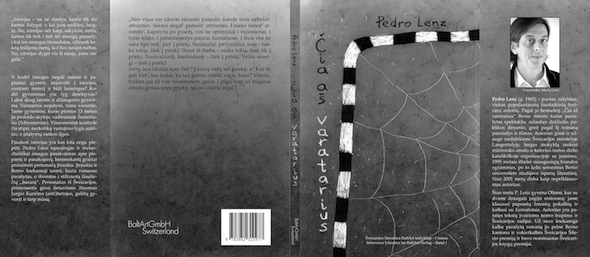
Šveicarijos leidykla ir galerija BaltArt. Palaiko Baltijos šalių meną, nišinių knygų leidimą ir vertimus.
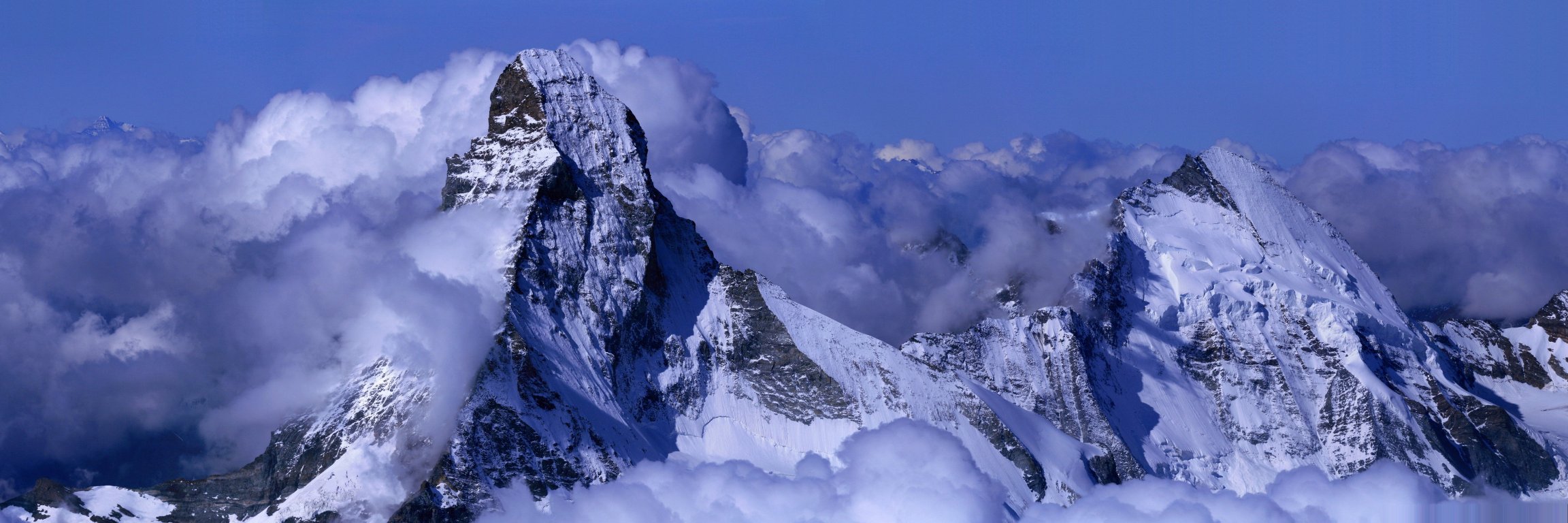
Matterhorn and Dent d’Hérens on the border between Switzerland and Italy.
Ambassador H. E. Lukas Handschin, working for Grün Stadt Zürich, the city of Zurich’s Office of Parks and Open Spaces.
A total of 17 Swiss people were living in Lithuania by the end of the year 2012. Out of the actually 1.864.699 foreigners living in Switzerland [by August 2013] approximately 1000 are Lithuanians.
Switzerland is a mountainous, landlocked country in Central Europe. Officially it is named Swiss Confederation (Latin: Confoederatio Helvetica, hence the abbreviation CH). You may have noticed this somehow strange country symbol on a sticker placed next to the number plate of cars. Get some useful travel information.
As a federal parliamentary republic Switzerland is currently consisting of 26 independent cantons, with no capital town. Bern, often considered to be the capital of Switzerland even by Swiss native people, is only the seat of the federal authorities and some – but by no means all – of the federal offices and institutions.
Switzerland has four official national languages, German, French, Italian, and Romansh (Rhaeto-Romanic), and a great variety of local dialects which may give you a hint about the manifold cultural regions and traditions. The Swiss, therefore, do not form a nation in the sense of a common ethnic or linguistic identity. The strong sense of belonging to the country is founded on the common historical background and shared values like federalism, direct democracy, independence, and neutrality. The establishment of the Swiss Confederation is traditionally dated to early August 1291 when a Letter of Alliance (or Federal Charter) was signed [there is no precise date given], documenting the Eternal League of the Three Forest Cantons, the union of three cantons (Uri, Schwyz, Unterwalden) forming the nucleus of the country in what is now part of central Switzerland. Hence Swiss National Day is celebrated on 1 August.
Switzerland is famous for its public transportation system, the federal railways as well as many others privately or publicly run companies. Have a look at this tv-spot.
Hereinafter you will find some examples of cultural ties between Switzerland and Lithuania in general, Vilnius and Užupis in particular.
Troughout the centuries the beauty of Swiss landscapes inspired many artists from all over Europe.
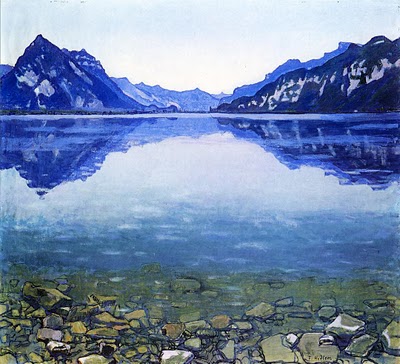
Ferdinand Hodler, Thunersee von Leissigen aus.
Switzerland did not only inspire painters but also quite a lot of Lithuanian authors and poets, among them e.g. Maironis at the beginning of the 20th century. This book which is leading you to the trails of Lithuanian authors in Switzerland was published in a bilingual Lithuanian-German edition in 2009 by Šveicarijos lietuvių bendruomenė.
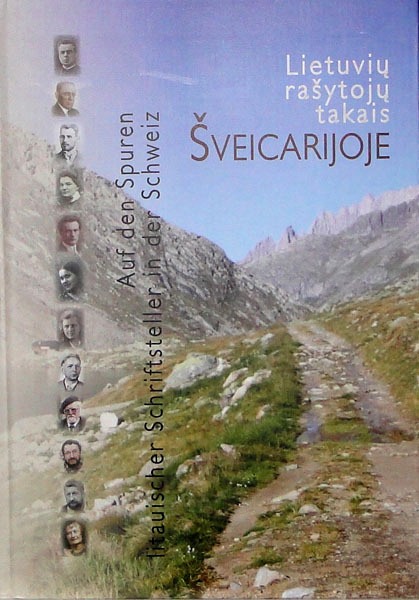
On the trails of Lithuanian authors in Switzerland.
Ambassador H.E. Tiago Salazar
Ambasadorius J.E. Jokūbas Vilius Tūras
2013.04.20 Ką tik pažiūrėjau kinoteatre “Pasaka” p. Ambasadoriaus filmą apie ėjimą Šv.Jokūbo keliu. Labai gilus, bet nesunkus filmas. Sunki galbūt buvo kelionė ir ką atrinkti, nes medžiagos buvo l.daug. Daugelis vietų mane sujaudino, ypač tos kur ryšys su ką tik gimusia dukra. Dar ir tai, kaip šitas pasaulis griaudžia, šaukia, spaudžia, bet koks jis gražus, ypač Ispanija:) Na, ir finalas Santiage ir Namie. Prisimenu, kaip jis išėjo į kelią, atsisveikinimą su juo 2010 sausį. Kas be ko, paskutinė viza jo knygutėje buvo mano uždėta Užupio viza:) – Užsienio reikalų ministras.
Ambassador H.E. Eva Ikstena- Strapcāne
Ambassador H.E. Andrei Slavuckyj
(also Ambassador to Sudan, Ethiopia and Somali)
On May 24, 2018 H.E. A.Slavuckij will be honoured with the highest award of Uzhupis Foreign Affairs – the order of the Silver Garlic bullet.
24 мая 2018 г. Его Превосходительству А. Славуцкому будет вручена высшая награда МинИнДел Ужуписа, орден Пули Серебряного чеснока.

The territory of Crimea was conquered and controlled many times throughout its history. The Cimmerians, Greeks, Scythians, Goths, Huns, Bulgars, Khazars, the state of Kievan Rus’, Byzantine Greeks, Kipchaks, Ottoman Turks, Golden Horde Tatars and the Mongols all controlled Crimea in its earlier history. In the 13th century, it was partly controlled by the Venetians and by the Genovese; they were followed by the Crimean Khanate and the Ottoman Empire in the 15th to 18th centuries, the Russian Empire in the 18th to 20th centuries, Germany during World War II and the Russian Soviet Federative Socialist Republic and later the Ukrainian Soviet Socialist Republic, within the Soviet Union during the rest of the 20th century.
Crimea is now an autonomous parliamentary republic, within Ukraine, which is governed by the Constitution of Crimea in accordance with the laws of Ukraine. The capital and administrative seat of the republic’s government is the city of Simferopol, located in the center of the peninsula. Crimea’s area is 26,200 square kilometres (10,100 sq mi) and its population was 1,973,185 as of 2007. Crimean Tatars, an ethnic minority who in 2001 made up 12.1% of the population, formed in Crimea in the late Middle Ages, after the Crimean Khanate had come into existence. The Crimean Tatars were forcibly expelled to Central Asia by Joseph Stalin’s government. After the fall of the Soviet Union, Crimean Tatars began to return to the region. According to the 2001 Ukrainian population census 58.5% of the population of Crimea were ethnic Russians and 24.4% were ethnic Ukrainians.[From Wikipedia]
——————–
It is worth mentioning that there are districts in the cities of the world, named after Crimea (and, according to Uzhupis law, having invisible connections and spirit of it). Such is picturesque Crimea in Torino, Italy, on the other bank of the Po river, with a monument for the heroes of the Crimean war(October 1853 – February 1856). – added by Minister of Foreign Affairs
Ambassador H.E. Andrei Slavuckij
Embassy exists since 2004, temporarily opened in Geneva. All citizens of Uzhupis are vividly discouraged from the visits to Somalia for the moment. As for both Sudans, please, take additional information about security situation in certain areas. Most of the Ethiopia is accessible for naturally curious Uzhupis folk.